Science
Physics, Chemistry, Mathematics and Biology, with English core.
Suited to students heading for engineering, medicine, agriculture, or the pure sciences. Practical work in all three laboratories is part of the board assessment.
Academics
Programmes from Playgroup to Class XII, three senior school streams, and the shape of the school year.
Programmes
The same campus at every stage, but a different approach. Here is what actually changes.
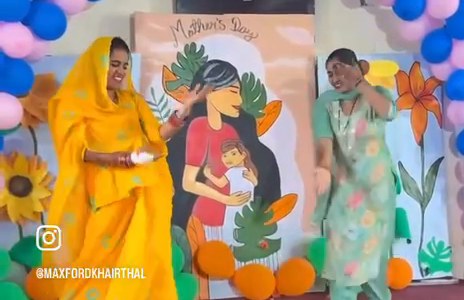
Playgroup, Nursery, LKG and UKG
The day is built around play, spoken language, and getting comfortable being away from home. Formal writing comes later than parents often expect, and that is deliberate.
Class I to V
The years where reading fluency and arithmetic have to become automatic. We test these often and quietly, and give extra time to any child who is not there yet.
Class VI to VIII
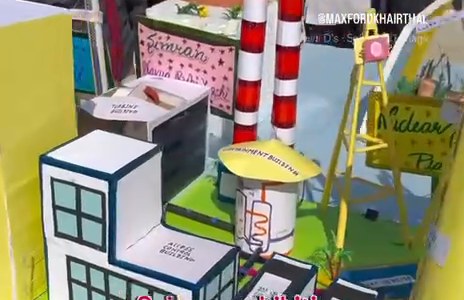
Subject teachers take over and the workload becomes real. Students start managing several deadlines at once, and laboratory work moves from demonstration to doing it themselves.
Class IX to XII
Board years. Teaching is paced against the CBSE examination pattern, with regular unit tests, pre-boards, and doubt clearing sessions outside class hours.
Stream selection happens after the Class X result, in a meeting with the student, a parent, and the class teacher. We advise honestly on the basis of performance rather than pushing everybody towards science.
Classes XI and XII
All three run every year. Subject availability in a given year depends on the number of students opting for it, so confirm with the school office before choosing.
Physics, Chemistry, Mathematics and Biology, with English core.
Suited to students heading for engineering, medicine, agriculture, or the pure sciences. Practical work in all three laboratories is part of the board assessment.
Accountancy, Business Studies, Political Science and Mathematics, with English core.
Suited to students heading for commerce degrees, management, company secretaryship, or professional accountancy.
History, Geography, Political Science and Hindi, with English core.
Suited to students heading for law, civil services, teaching, journalism, or the social sciences. Taken seriously here, not treated as the stream left over.
How we teach
Short, frequent checks rather than only two big examinations. A teacher should know within a fortnight if a student has stopped following, not after the term ends.
Students who need it get scheduled extra sessions in the subject they are weak in. This is normal here and carries no stigma.
English conversation classes run alongside the syllabus. A student who can write a correct answer but cannot speak in an interview has only been half taught.
Examination planner
The examination schedule the school works to. The full dated calendar, with holidays, special assemblies and the activity plan for every class, is available as a download.
| Examination | Classes I to VIII, X and XII | Classes IX and XI | Playgroup to UKG |
|---|---|---|---|
| Mock test | Last week of July | 2nd week of July | 2nd week of July |
| Pre mid term | 3rd week of July | 1st week of August | Quarterly, 2nd week of August |
| Mid term | 2nd week of September | 2nd week of September | Mock, 2nd week of November |
| Post mid term | 2nd week of December, with Pre-Board I | 2nd week of December | Half yearly, 2nd week of December |
| Pre-Board II and mock | 1st week of January and 2nd week of February | Mock, 2nd week of January | Mock, 2nd week of February |
| Annual examination | Oral from 1st week of March, written from 11 March | 2nd week of February | 2nd week of March |
Board examinations for Classes X and XII run to the CBSE schedule. Longer breaks in the session: summer from 18 May, Dussehra 18 to 20 October, Diwali 27 November to 1 December, and winter 1 to 7 January. Confirmed dates are sent to parents as circulars.
Examinations
Classes I to V are assessed continuously through classwork, reading checks, and term examinations. From Class VI, students sit unit tests and one major examination per term, following the CBSE pattern of internal assessment plus a written paper.
Classes IX to XII follow the CBSE scheme of periodic tests, practicals, internal assessment, and the annual or board examination.
Report cards are issued after each major examination and collected by a parent in person at the parent teacher meeting, not sent home with the child. This is deliberate. It guarantees a conversation about the result.
If a student's performance drops sharply between assessments, the class teacher contacts the parent before the next report card.
Promotion is based on the full year's performance, including internal assessment, not a single paper. Students who fall short in one or two subjects are given a re-examination after remedial teaching in the vacation.
Where a child would clearly struggle in the next class, we discuss repetition with parents openly and early. We do not spring it on a family in April.
Classes X and XII sit pre-board examinations under board conditions, with subject-wise doubt sessions outside timetable hours and past paper practice under timed conditions.
Students who score above ninety percent in the Class X board examination receive a ten percent tuition fee discount in Class XI. The details are on the admissions page.